Manufacturing awards reward what happens on the production floor: consistent quality, safe operations, efficient use of energy and materials, and products that customers in the Gulf and beyond rely on. For manufacturers in the UAE, Saudi Arabia and the wider GCC, a strong nomination turns that operational record into a clear, evidence-backed story that an evaluator can follow in one read.
What manufacturing awards recognise
A general business award looks at a company through its commercial results. A manufacturing award looks more closely at how the product is made. Evaluators want to understand the plant or production network, the quality system behind it, how output and efficiency have changed, and what the business has done about safety, people and resource use.
That focus suits the Gulf, where manufacturing now spans food and beverage production, pharmaceuticals, building materials, chemicals, packaging, furniture, electronics and specialised industrial products. National industrial and in-country value programmes across the GCC have encouraged more local production, and many regional manufacturers now supply customers in several markets at once. A manufacturing award gives those businesses a way to show that their record has been reviewed against published criteria.
The strongest entries tend to share one feature: they explain a specific improvement and prove it. A nomination that says a plant became more efficient is hard to assess. One that shows how first-pass yield or on-time delivery changed over a defined period, and explains the decisions behind the change, gives the evaluator something concrete to score.
Choosing the right manufacturing category
The Manufacturing Awards include twenty categories. They fall into three groups: sector categories that compare producers in the same field, cross-sector categories that recognise a particular strength, and a leadership category for the person behind the operation. Picking the category that matches your strongest evidence is the single most useful decision in the entry.
| Category | Best fit when the entry shows |
|---|---|
| Manufacturer of the Year | Strong results across the whole business: output, quality, growth and contribution, not a single project |
| Sector categories (Food, Beverage, Pharma, Chemical, Packaging, Textile, Building Materials, Furniture, Electronics, Industrial, FMCG, Defense & Aerospace) | Performance that is best judged against other producers in the same field |
| Best Smart Factory | Automation, data systems or connected equipment that measurably changed output, quality or downtime |
| Most Innovative Manufacturer | New products, materials or processes developed and brought into production |
| Sustainable Manufacturer | Lower energy, water, waste or emissions per unit, with figures for the start and end of the period |
| Best Quality Program | A quality system that reduced defects, returns or complaints, with audit or certification evidence |
| Best Industrial Export Brand | Growth in export markets served and the share of output sold outside the home country |
| Best Made-in-Arabia Brand | A locally made product brand that has built recognition with customers in the region |
| Manufacturing Leader of the Year | A plant director, operations head or founder whose own decisions drove the results |
If two categories could apply, choose the one where your evidence is strongest, and consider a second entry only when you can lead it with different proof. The full list across industries and countries is on the award categories page.
Read our strategy guide on how to win an award, from choosing a category to structuring evidence.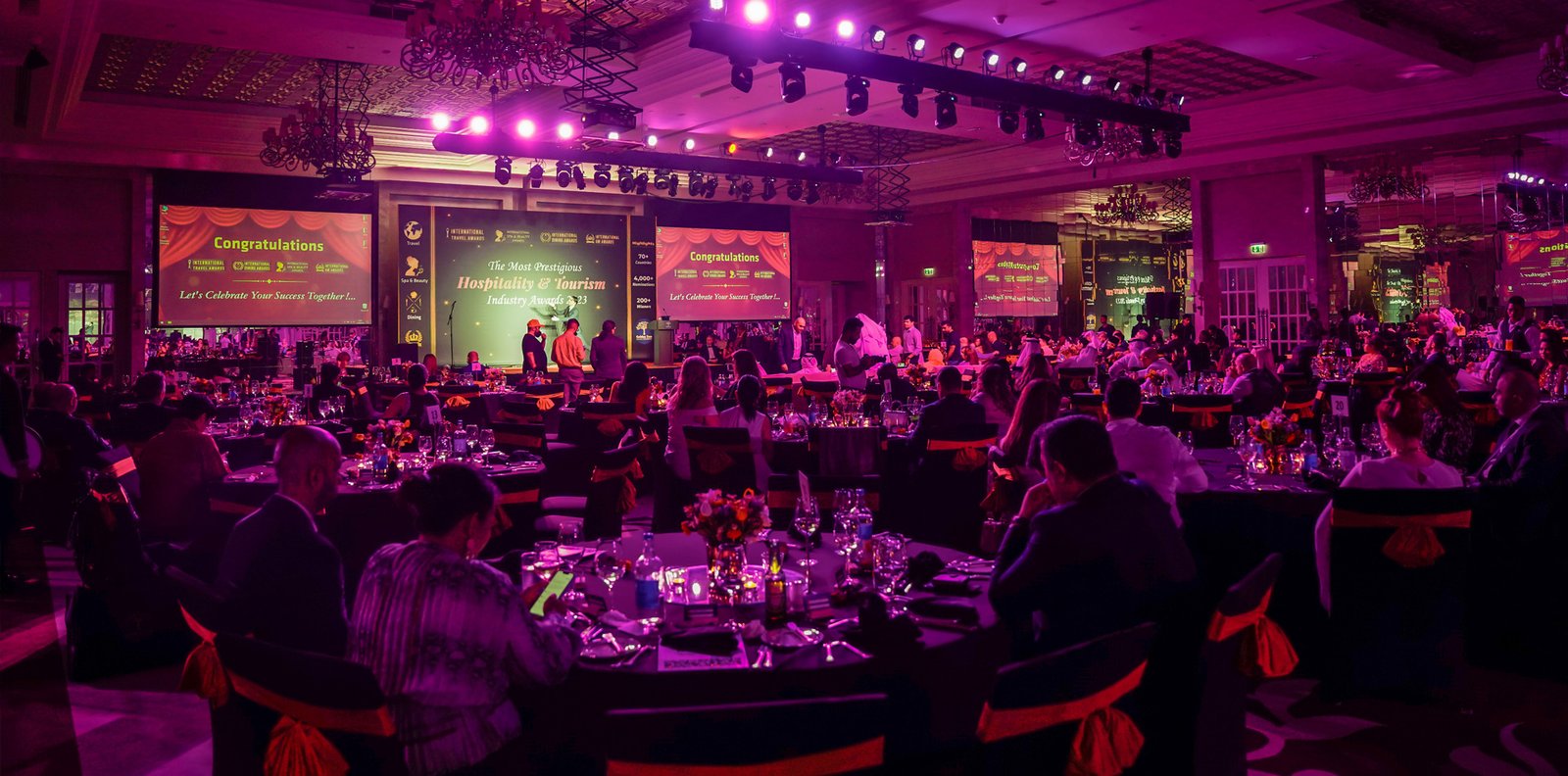
The evidence that makes a manufacturing entry credible
According to our selection process, the factual basis of each nomination is checked before it is scored. In manufacturing, that means figures matter more than adjectives. Choose the measures your plant already tracks, state the period they cover and say where they come from.
| Area | Useful evidence | What to avoid |
|---|---|---|
| Quality | First-pass yield, defect or return rates, customer complaint trends, quality certifications held with their dates | Claims of “zero defects” without a period or a source |
| Output and efficiency | Change in output, equipment effectiveness or downtime over a defined period; on-time delivery rate | Capacity figures presented as actual production |
| Safety | Lost-time injury trend, safety training delivered, audit results | Incident details that identify individual employees |
| Sustainability | Energy, water or waste per unit produced, at the start and end of the period | Broad “green” statements with no baseline |
| Export and growth | Number of markets served, share of output exported, new customer segments | Named customers or contract values without permission |
| People | Training hours, technical certifications earned, progression of local talent into supervisory roles | Personal data, salaries or performance reviews |
| Independent confirmation | A short statement from a customer, auditor or partner who saw the improvement first-hand | Letters that only praise without describing results |
Three or four well-chosen supporting documents usually serve the entry better than a large folder. A one-page summary of key indicators signed off by a senior colleague, a current certificate and one customer statement are often enough to support the main claims.
Protect confidential production information
Manufacturers often hold back from award entries because they worry about revealing how their products are made. You do not need to. Describe what changed and what it achieved, not the formulation, recipe or machine settings behind it. Present results as percentages, ratios or ranges, and leave out supplier terms, cost sheets and customer pricing.
If a customer is central to the story, describe them by sector and market, such as “a regional food retailer” or “an infrastructure contractor in Saudi Arabia”, unless you have their written permission to name them.
A simple structure for the nomination
Most manufacturing nominations have room for a few hundred words on achievements. A clear order helps the evaluator follow the story:
- Context. What the business makes, where it produces, and the markets it supplies.
- Challenge. The problem or opportunity at the start of the period, in figures where possible.
- Action. The investments, process changes, systems or training the business put in place.
- Results. Two or three outcome figures with a defined period and a source.
- Wider effect. What changed for customers, employees, the supply chain or resource use.
Write in plain language and avoid superlatives. A sentence such as “on-time delivery rose over the twelve months to June, based on our order management records” is more persuasive than a claim to be the region's leading producer.
Manufacturing nominations across the GCC
Manufacturers based anywhere in the Arab region can be nominated, and the Manufacturing Awards are available in every country programme. Businesses can be recognised in the regional manufacturing categories, in a specific country's categories, or both. Our country pages for the UAE, Saudi Arabia, Qatar, Kuwait, Bahrain and Oman explain how recognition works in each market.
Groups that operate plants in more than one GCC state can present results site by site. This makes it easier to see where the strongest improvement happened and may point to a country category as the better fit. Manufacturers whose story is mainly about distribution or construction supply may also look at the Logistics Awards or Construction Awards.
2027 manufacturing awards timeline
| Stage | Date |
|---|---|
| Nominations open | 10 October 2026 |
| Early bird deadline | 15 December 2026 |
| Regular deadline | 30 January 2027 |
| Review | 1 February – 15 March 2027 |
| Winners confirmed internally | 20 March 2027 |
| Gala ceremony | 24 April 2027 |
Starting early leaves time to gather certificates and figures and to ask a customer or auditor for a short statement before the deadline.
Recognition for outstanding businesses, entrepreneurs and leaders across the Arab region.
Nominate Now View Award CategoriesChecklist before you submit
- The category matches the strongest evidence in the entry.
- The entry shows the starting point, the actions taken and the results, in that order.
- Every figure has a period and a source that can be checked.
- No formulations, supplier terms, cost data or customer pricing appear in the entry.
- Customers are named only with their written permission.
- Certificates referred to in the text are current and attached.
- At least one customer, auditor or partner can confirm the improvement first-hand.
Frequently asked questions
Who can enter manufacturing awards in the GCC?
Any business that manufactures in the Arab region can be nominated, including companies headquartered in the UAE, Saudi Arabia, Qatar, Kuwait, Bahrain or Oman and international manufacturers with significant production operations in the region. Food, pharmaceutical, chemical, building-materials, packaging, electronics and furniture producers are all covered.
How many manufacturing award categories are there?
The Manufacturing Awards include twenty categories. They cover sector categories such as Best Food Manufacturer and Best Pharma Manufacturer, cross-sector categories such as Manufacturer of the Year, Best Smart Factory and Sustainable Manufacturer, and a leadership category, Manufacturing Leader of the Year.
What is the difference between Manufacturer of the Year and a sector category?
Manufacturer of the Year looks at the business as a whole: output, quality, growth and contribution across its operations. A sector category such as Best Food Manufacturer or Best Building Materials Manufacturer compares the entry with producers in the same field, so it suits a company whose strongest evidence is specific to that sector.
What evidence should a manufacturing nomination include?
Two or three figures for each area you claim, each with a defined period and a source. Typical examples are first-pass yield or defect rates, on-time delivery, safety performance, energy or water use per unit, export markets served and training delivered. Certificates held, with their dates, and a short statement from a customer or auditor who saw the improvement are also useful.
Do we have to share confidential production data?
No. Present results as percentages, ratios or ranges, and describe processes at a level that does not reveal formulations, recipes, supplier terms or customer pricing. Do not upload customer contracts or internal cost sheets.
Can a factory enter more than one category?
Yes. A manufacturer may be nominated in more than one category when the evidence supports each one, for example a sector category and Sustainable Manufacturer. Each entry should lead with the evidence that matters for that category.
When are the 2027 manufacturing awards decided?
For the 2027 cycle, nominations open on 10 October 2026, the early bird deadline is 15 December 2026 and the regular deadline is 30 January 2027. Review runs from 1 February to 15 March 2027, and winners are revealed at the gala on 24 April 2027.
Who evaluates manufacturing nominations?
Every nomination is scored on the same criteria, and winners are selected by the Jury team or, depending on availability, the Management of Golden Tree. Every nomination is made under a nomination plan, and paying the nomination fee does not guarantee a win.
When the evidence is ready, open the nomination form and select the Manufacturing industry and the category that matches your strongest results. Every nomination is made under a nomination plan; the nomination plans page sets out the options. Past manufacturing winners are listed in our winner directory.